At Saint Meinrad, we understand pastoral formation as an ongoing process of preparing for ministry, practicing pastoral charity, and reflecting upon the ministry event. These three steps lead naturally from one to the next and guide the seminarian in a process of deepening his pastoral skills, conforming his heart and mind to that of the Good Shepherd, and integrating his ministry into the mission of the local church through obedience and collaboration.
Prepare: Formation Conferences
There are two Pastoral Formation conferences for each class every semester. We invite members of the formation staff, or experienced local clergy and lay ministers, to instruct the seminarians on a pastoral topic or skill that is relevant to their supervised ministry. The seminarians engage the speakers in dialogue about their experience, and they gain insight into how they might better minister in similar circumstances.
The following topics are addressed in the Discipleship Stage:
I Discipleship: Understanding the Different Aspects of Ordained Leadership.
- The Permanent Diaconate
- Dimensions of Consecrated Life
- Leadership: Forming the Faith Community
- Universal Call to Holiness and Leadership
II Discipleship: Introduction to Youth and Young Adult Ministry
- Youth And Young Adult Ministry
- Campus Ministry: Evangelization and Levels of Discipleship
- Catechesis for Persons with Special Needs
- Ministry and Trust
The following topics are addressed in the Configuration Stage:
I Configuration: Ecumenical ministry
- The Church: Ecumenism and Inter-religious Dialogue
- Judaism (Tour of a synagogue and discussion with Rabbi)
- Prison Ministry
- Brothers and Sisters to Me (Military Chaplaincy)
II Configuration: Clinical and parish ministry
- Hospice Care, Aging and Dementia
- Pastoral Care: Referrals and Closure
- Models in Pastoral Ministry
- Conflicts in Leadership
III Configuration: Parish ministry
- Marriage Preparation
- Mission Advancement: Stewardship and Development
- Working with Parish Staff
Although each seminary course is relevant to pastoral formation, the courses below bear most directly on pastoral theology and practice, preaching and liturgical ministries:
I Configuration
- 44:300 Evangelization and Catechesis (2 credit hours)
- 40:511 History and Culture of the Church in the Americas (2 credit hours)
II Configuration
- 42:535 Foundations in Homiletics (3 credit hours)
- 43:525 Pastoral Care and Counseling (3 credit hours)
- 10:500 Ecclesiology and Ecumenism (3 credit hours)
- January Mission Experience in Guatemala
III Configuration
- 42:540 Advanced Homiletics (3 credit hours)
- 54:540 Advanced Homiletics Practicum (1 credit hour)
- 54:550 Practicum in Homiletics/Liturgics I (1 credit hour)
- 15:545 Catholic Social Ethics (3 credit hours)
IV Configuration
- 15:551 Sexual and Medical Ethics (3 credit hours)
- 43:550 Ministry to Families (3 credit hours)
- 12:555 Sacrament of Reconciliation (3 credit hours)
- 54:555 Practicum in Homiletics/Liturgics II (1 credit hour)
Practice: Supervised Ministry
Supervised ministry is a practical learning experience, guided by an experienced supervisor. At the supervised ministry sites, seminarians learn by observing, practicing, and reflecting on their ministry with their supervisor and peers. Seminarians spend an average of three hours per week during a semester in ministry.
During the Discipleship Stage, seminarians participate in the following sequence of supervised ministry placements:
I Discipleship & II Discipleship: Ministry to the Poor and the Marginalized
- Ministering in social outreach and non-profit organizations (cf. PPF, 394).
- Interacting with a diversity of cultures and actively engaging in the various aspects of Catholic social justice.
During the Configuration Stage, seminarians participate in the following sequence of supervised ministry placements:
I Configuration: Ministry to Young Adults
- Ministering at a college Newman Center, a parish young adult ministry, or on-campus young adult ministry events at Saint Meinrad.
- Developing an awareness and appreciation of the necessity of the education and formation of young adults (PPF, 370f).
II Configuration: Ministry to Hispanic/Latino Catholics
- Ministering to Hispanic and Latino Catholics so that seminarians may grow in their understanding and appreciation for the cultural diversity of the Church in the United States (PPF 395).
- Growing in the skills of pastoral presence in a culture and language that is not one’s own.
III Configuration: Catechetical Ministry
- Ministering in a variety of parish ministries, with a focus on taking a leadership role as a catechist.
Recommended Summer Formation
- I & II Discipleship: Language Immersion, Totus Tuus
- I Configuration: An 8-10 week immersion in parish ministry, under the supervision of an experienced pastor, focusing on the pastoral dimensions of parish life.
- II Configuration: Clinical Pastoral Education (CPE), an 8-10 week intensive program in hospital ministry.
- III Configuration 3: A second 8-10 week immersion in parish ministry, under the supervision of an experienced pastor, continuing to familiarize the seminarian with the pastoral dimensions of parish life as well as immersing the seminarian in matters of parish administration. A preaching module is also required for seminarians who have already been ordained deacons.
Reflect: Ministry Reflection Papers and Theological Reflection Groups
Seminarians compose a ministry reflection paper towards the end of each semester “to interpret pastoral experience or activity in light of Sacred Scripture, Church teaching, personal faith, and pastoral practices. Reflection of this kind should become a lifelong habit in priestly ministry” (PPF, 391).
Each seminarian meets regularly in a small group for theological reflection. A member is assigned as the group facilitator, who leads the meetings and makes sure that conversation is fruitful and edifying. The purpose of the group is to grow in the virtue of spiritual understanding, to discern more clearly our vocational identity as a minister of apostolic works, and ultimately to live and minister in greater awareness of the movements of the Holy Spirit.
For more information, contact our pastoral formation staff:
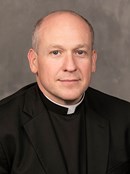 |
Fr. Christopher House |
 |
Cassie Schutzer |